

A Word From Matt Hoag, Ph.D, Therapist at ThreePeaks Ascent
"We work with a lot of young people who haven't had success or have gotten really good at playing the game of therapy... Adventure-based therapy works well for young people who are sometimes either resistant to or have not found success at more traditional outpatient."
What is Adventure Therapy?
Adventure therapy is a form of experiential treatment that uses outdoor activities and structured challenges to help teens build emotional regulation, self-awareness, and healthy coping skills.
Adventure therapy is a type of experiential therapy that uses structured outdoor experiences to support emotional healing and personal growth. It connects physical challenge with emotional development, helping teens build identity, resilience, and confidence through action-based learning.
At its core, adventure therapy helps teens develop:
- Emotional regulation skills
- Self-awareness and insight
- Healthy coping strategies
- Identity development
- Self-esteem and confidence
- Grit and perseverance
- A growth mindset
At ThreePeaks Ascent, teens participate in activities like rock climbing, skiing, and mountain biking in intentionally therapeutic settings. These experiences go beyond recreation; students are actively learning to:
- Stay safe in real environments
- Regulate emotions under stress
- Communicate and work with others
- Persist through difficulty
- Build confidence through achievement
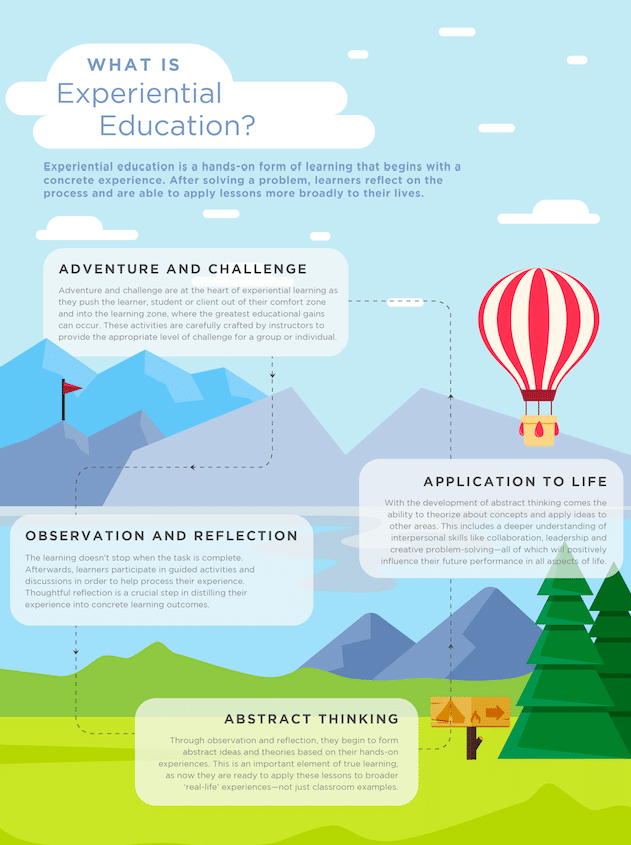
A key part of this model is experiential learning. Teens don’t just participate in activities; they learn how to do them, take responsibility for them, and reflect on their experiences.
Field guides play a central role in this process. Because they are present throughout the residential treatment day, they are able to:
- Build trust and rapport
- Teach skills in real time
- Support emotional processing during challenges
- Help students reflect immediately after experiences
This creates opportunities for real-time emotional insight, where growth happens in the moment, not just in traditional talk therapy sessions.
You don't have to watch your teen decline in an environment that keeps them stuck. Reach an Advocate right now. We are standing by to listen, validate, and guide.
To ensure safety, our field guides are trained to the standards set by the leading professional organization related to each activity. Additionally, all of our policies are overseen by the Association of Experiential Education (AEE), which ensures that ThreePeaks Ascent meets the highest standards for teaching adventure activities safely and effectively.
What Are the Benefits of Adventure Therapy?
Adventure therapy helps teens improve emotional, behavioral, and social functioning while also building resilience, self-efficacy, and healthier coping strategies.
In the unique aspects of adventure therapy within a structured outdoor therapeutic setting, students engage in clinically guided physical challenges, which create a powerful environment for lasting emotional change. Each student comes to ThreePeaks Ascent with their own story and mental health issues. While treatment plans are unique to each student, adventure is a part of all of them. When we include adventure as part of a nature-based treatment plan, we see several benefits:
- A decrease in symptoms of anxiety and depression
- Increased self-efficacy
- Improved executive functioning
- Improved interpersonal skills
- Identity development
- Improved grit
- Trauma resilience
- Learning to self-advocate for needs
- Accurate clinical assessments
While each student comes with their own story, the therapeutic adventure model is versatile enough to meet each student at their level.
ThreePeaks Ascent students go through a process of learning, facing challenges, failing, getting back up, and eventually succeeding. This process is then combined with an advanced clinical approach. The combination has proved to be highly effective at addressing a variety of mental and behavioral health issues. These benefits are magnified in a therapeutic adventure model where every task is connected to a therapeutic goal.
Why Does Adventure Therapy Work?
Adventure therapy is extremely effective at helping clients develop these foundational psychological principles.
Identity Development
Identity refers to one's sense of as an individual and how they define themselves in terms of values, beliefs, and role in the world. Self-identity in adolescence forms the basis of our self-esteem later in life.
Self-Efficacy
Self-efficacy is the belief we have in our ability to succeed in a particular situation, specifically our ability to meet the challenges ahead of us and complete a task successfully. Self-efficacy plays a role in not only how we feel about ourselves, but also whether or not we successfully achieve our goals in life.
Flow Theory
In psychology, flow is “the holistic sensation that people feel when they act with total involvement.”
Grit
Grit is “the combination of perseverance and passion toward long-term goals.” Grit is when you’re able to harness the power of passion and turn it into resolve, persistence, stamina, and tenacity, working toward goals that endure over time. In short, grit is: consistent. hard. work.
Growth Mindset
A growth mindset is the underlying belief people have about learning and intelligence. When students believe they can get smarter, they understand that effort makes them stronger. Therefore they put in extra time and effort, and that leads to higher achievement.
How Do Adventure Activities Support Teen Therapy?
Each adventure activity is designed to teach emotional regulation, problem-solving, communication, and resilience through real-time experience and reflection.
ThreePeaks Ascent is unique because it offers a variety of high-adventure activities both on campus and at nearby locations. Please note that not all adventure therapy activities will be available to each student due to a variety of factors weather, season, etc. All the adventure activities are facilitated by experienced field guides. This section will give an overview of some potential ThreePeaks Ascent adventure activities your teen may be involved in:
- Rock Climbing – Climbing puts youth participants into a place where they need to confront their fears, physical challenges, lack of confidence, and many other obstacles to success. They face a seemingly insurmountable wall, and through thorough planning, coaching, effort, and practice, they reach new heights. This is a powerful metaphor for them to generalize to the rest of their life.
- Skiing – Skiing challenges students to think less and be in the moment. Students learn about “flow theory” when they enter a mental state where they react to their changing world without time for anxiety or fear. This natural high is both a healthy coping mechanism and a counter to anxious thoughts.
- Canyoneering – Success in canyoneering is dependent upon teamwork. Team-building and creative problem-solving are critical skills taught to students while canyoneering. Taking the first step in treatment is always the hardest, and stepping into a rappel is an effective way to learn to control one's fear and trust in oneself.
- Mountain Biking – Mountain biking challenges students to assess risk accurately and pushes them to react to challenges as they approach. Students may find that they do not have the time to think about what the next obstacle in the trail is, and instead, trust their instincts and training. Mountain biking builds trust in themselves and allows them to learn or practice being in the moment.
- Hiking & Navigation – Hiking is a fundamental outdoor activity at ThreePeaks Ascent. It teaches grit and can be used as a platform to build a group culture. ThreePeaks Ascent students can improve their interpersonal and social skills as they experience what it is like to be a part of a group that works together to complete a common goal, like reaching the top of a 10,000 ft peak.
- Challenge Course – ThreePeaks Ascent's on-site challenge course is a low ropes course that strengthens group cohesion and teaches social-pragmatic skills. Student groups work together through a series of challenging tasks. All tasks require effective communication, leadership, listening, and cooperation to overcome. Through failure, coaching, and perseverance, students learn what it takes to be a team player.
Wondering What Your Teen Really Needs? Start Here.
Take our free teen assessment to better understand your child’s needs. You’ll get clear results and a no-pressure follow-up from a ThreePeaks Ascent expert.
What Mental Health Challenges Can Adventure Therapy Help With?
Therapeutic adventure is highly versatile in treating a variety of mental illnesses and behavioral health diagnoses. This unique approach is useful in different ways for people struggling with different challenges.
Anxiety and Depression
For students struggling with anxiety and depression, adventure can be an essential avenue for treatment, in part due to the benefits of physical activity on mood.
Research shows that incorporating exercise into daily life can improve both mental and physical health outcomes for individuals experiencing depression and anxiety. At ThreePeaks Ascent, students develop consistent, healthy exercise habits as they engage in a variety of adventure-based experiences. They also gain the ability to continue these activities after treatment, helping them maintain long-term benefits.
Students struggling with anxiety and depression often show particularly strong outcomes when engaging in adventure activities that activate flow theory.
Mountain biking and skiing, for example, often create conditions for a mental “flow” state, where teens become fully immersed in the present moment and temporarily disengage from anxious thought patterns. In this state, they respond directly to environmental cues rather than overanalyzing potential outcomes. This is nearly the opposite of anxiety.
Mountain biking, in particular, can create a sense of focus and momentum that feels both grounding and emotionally regulating, making it especially effective for teens experiencing depression or anxiety.
Additionally, overcoming seemingly impossible challenges, such as climbing a rock wall or rappelling off a cliff, helps students build self-efficacy.
Increasing self-efficacy is a key factor in helping teens manage anxiety and depression. Through therapeutic adventure, teens learn how to:
- Manage anxiety in real time
- Communicate more effectively
- Build confidence through action and achievement
Self-Esteem Issues
Adventure therapy is well-suited to addressing low self-esteem and low self-efficacy. Many youth struggle to see themselves in a positive light due to self-defeating internal narratives, past experiences, or learned helplessness. Some may develop an expectation that they will fail before they even begin.
Adventure therapy consistently improves self-efficacy by placing youth in structured, challenging environments where success feels initially out of reach, but becomes possible through guidance, persistence, and effort.
This process is supported by research, including studies showing:
- Statistically significant improvements in self-concept compared to alternative therapy methods (over 3.5x greater outcomes in some findings)
- Transfer of improved self-efficacy from outdoor environments into academic and real-world settings
This suggests that gains made through adventure therapy are not limited to the outdoor setting; they generalize into other areas of life.
Foundational research on self-efficacy also identifies efficacy beliefs as one of the strongest predictors of future performance. By strengthening these beliefs through experiential challenge, adventure therapy can meaningfully improve long-term outcomes and future success.
Relationship Issues & Family Conflict
Relational conflict can take many forms, but one of the most common is conflict within the family unit. Family systems play a central role in adolescent development, and maintaining healthy relationships within that system is critical for long-term emotional well-being.
When relationships become strained, it can significantly impact a teen’s sense of stability, identity, and functioning. In these cases, support may be needed to help restore healthy communication and connection.
ThreePeaks Ascent addresses relational and family conflict through an adventure therapy model that emphasizes shared experience, structured communication, and guided emotional processing.
Research has shown that adventure therapy can have a positive effect on overall family functioning, with outcomes that may exceed those of other therapeutic approaches.
Clinicians at ThreePeaks Ascent take a whole-family approach, working to support:
- The teen’s emotional development
- Parent-child communication patterns
- Family connection and trust
- Long-term relational stability
Identity Development
Identity development is a critical part of adolescence and is closely tied to self-concept, values formation, and social development. A strong sense of identity is foundational to emotional health, decision-making, and long-term success.
Many adolescents struggle with identity formation, often feeling uncertain about who they are, what they value, or where they fit socially and emotionally.
Research has shown that adventure therapy can produce significant positive outcomes in areas that contribute to identity development, including:
- Social development
- Self-concept
- Morality and spirituality
These outcomes have been shown to be more significant than those produced by non-adventure-based therapies, and in some cases demonstrate no post-treatment regression.
This research highlights the importance of experiential education and its emphasis on:
- Active participation and personal responsibility
- Engagement with natural environments
- Use of challenge and perceived risk to create growth (eustress)
- Meaningful engagement in real-world experiences
- A focus on present and future functional behavior
- A supportive, holistic therapeutic environment
School Anxiety, Refusal, or Failure
Understanding school failure requires looking beyond academic performance and into the underlying emotional, behavioral, and psychological factors that contribute to disengagement.
School failure can stem from a variety of challenges, including anxiety, depression, trauma, and behavioral dysregulation.
While each case is unique, research indicates that adventure therapy can be an effective intervention for school-related struggles. One large study found that adventure therapy had a statistically significant positive impact on school failure outcomes, with effects more than four times greater than non-adventure-based approaches.
These findings highlight the potential of experiential, action-based therapy to support academic engagement and long-term success.
Behavior Issues
The adventure therapy model at ThreePeaks Ascent is grounded in structured challenge, accountability, and guided support through difficulty.
Students are placed in environments that require them to:
- Problem-solve under pressure
- Communicate effectively with peers
- Manage emotional responses
- Follow structure and expectations
- Persist through challenge
Research has shown that this process can lead to “large to very large, statistically significant improvements in behavioral and emotional functioning.”
While behavioral challenges vary widely, the adventure therapy model is adaptable and designed to meet each student where they are developmentally and emotionally.
Autism and Other Neurodiverse Conditions
All of the adventure experiences at ThreePeaks Ascent are conducted in a group setting, including group therapy. They all require cooperation, communication, collaboration, and conflict resolution. These are all skills that many of our neurodiverse students are working on while at ThreePeaks Ascent.
Whether a student is struggling with symptoms associated with being on the autism spectrum or from another neurodevelopmental disorder like a non-verbal learning disorder, ThreePeaks Ascent can provide individualized treatment plans to meet them where they are. The adventure therapy setting creates authentic social interactions that can be tailored by staff to meet the group's needs and allows for processing and debriefing of behaviors. Karoff et al. break down the reasons that adventure therapy is effective for youth on the autism spectrum or with other neurodevelopmental disorders into three elements:
- Adventure therapy is inherently unpredictable. This provides ASD youth with frequent opportunities to engage with peers in an authentic, uncontrived way. They can engage with peers in this way while in an environment of support and trust.
- Adventure therapy is a group-driven process that is, by nature, flexible and adaptable to the specific needs of the group and individuals within it.
- Adventure therapy is a here-and-now approach that creates space for youth to cognitively process how behaviors and feelings experienced in the moment relate to participants’ lives beyond the natural setting.
Karoff et al. sum up the value of Adventure Therapy in treatment for those on the autism spectrum writing, “The power of Adventure Therapy lies in experiencing real behaviors, in real-time, and reflecting on how they are either helpful or limiting to a participant's life, and then learning new ways of behaving, thinking or feeling, and providing a space to practice those new behaviors before trying them out in the real world.”
Eating Disorders
Eating disorders present unique clinical challenges and are often difficult to manage in home environments. While presentations vary, a common underlying factor is difficulty with body image and self-perception.
Adventure therapy can be an effective treatment option when carefully structured with appropriate supervision to ensure physical and emotional safety.
Research on nature-based treatment suggests that reconnecting with the physical body in supportive outdoor environments can be therapeutic. One study emphasizes that while nature alone is not sufficient for transformation, the combination of:
- Group process
- Guided challenge
- Structured risk-taking experiences
Can help disrupt harmful self-perceptions and support healthier relationships with the body.
Traumatic Brain Injuries (TBIs)
Traumatic brain injuries can result in behavioral, cognitive, and executive functioning challenges that require context-sensitive intervention.
Traditional approaches such as Positive Behavior Supports (PBS) emphasize improving functioning through structured, real-world environments.
Adventure therapy aligns with this approach by providing:
- Natural settings for skill practice
- Real-time behavioral feedback
- Opportunities for repetition and learning through experience
Research suggests that adventure therapy functions as a contextualized intervention, relying on experiential learning in natural environments.
Key elements include:
- The client actively participates rather than observes
- Engagement requires motivation, effort, and responsibility
- Activities are meaningful and have real consequences
- Reflection is an essential part of the process
- Skills are designed to transfer to real-life functioning
Attention deficit hyperactivity disorder (ADHD)
Attention deficit hyperactivity disorder (ADHD) can significantly affect attention, impulse control, academics, relationships, and behavior.
Research has shown that increased interaction with nature may help reduce ADHD symptoms in adolescents. At ThreePeaks Ascent, students participate in structured physical activity and experiential experiences in outdoor settings that support emotional regulation, attention, and overall well-being.
Students at ThreePeaks Ascent participate in structured physical activity and experiential engagement in nature.
Adventure therapy supports teens with ADHD by:
- Increasing structured physical engagement
- Supporting focus through active learning
- Reducing behavioral dysregulation through movement-based experiences
- Improving social and academic functioning through real-world practice
Other studies also show improvements in:
- Academic performance
- Behavioral regulation
- Social development
These findings suggest that experiential therapy can address both core ADHD symptoms and related functional challenges.
Trauma/PTSD
Trauma can leave individuals in a persistent heightened arousal state, where the nervous system remains activated long after the original event has passed.
Adventure therapy can support trauma recovery by helping teens:
- Engage with a controlled, manageable challenge
- Experience and complete stress-response cycles safely
- Rebuild a sense of control and safety
- Process fear in structured environments
High-adventure activities such as rock climbing, skiing, canyoneering, and mountain biking can gently activate fear responses in a safe setting, allowing teens to experience:
- Activation
- Engagement
- Resolution and calm
Research on Nature Adventure Rehabilitation (NAR) found improvements in:
- Perceived control
- Emotional and social quality of life
- Hope
- Overall functioning
These effects are linked to behavioral activation, gradual exposure, and increased emotional regulation.
Substance Abuse & Addiction
Adventure therapy is an effective tool in supporting recovery from substance use because it provides healthy, non-substance-based sources of reward, challenge, and emotional engagement.
It helps teens:
- Build healthy coping strategies
- Replace substance-seeking behaviors with positive experiences
- Develop new peer connections
- Strengthen resilience and identity
Adventure-based experiences can also support:
- Increased self-awareness
- Improved family relationships
- Greater motivation for change
- Reduced relapse vulnerability
Opposition and Defiance
Adventure therapy has been shown to be effective in supporting teens with oppositional and defiant behaviors.
It helps by creating environments that emphasize:
- Clear structure and expectations
- Consistent boundaries
- Natural consequences
- Immediate feedback
- Relationship-based accountability
For strong-willed adolescents, particularly those with co-occurring ADHD, defiant behaviors may emerge when boundaries are inconsistent or unclear.
At ThreePeaks Ascent, guides provide:
- Clear instructions
- Achievable goals
- Consistent structure
- Opportunities for reflection and repair
This combination supports improved cooperation, emotional regulation, and relational repair over time.
Adventure therapy works because it combines challenge, reflection, and real-world experience to help teens build lasting emotional and behavioral change.
ThreePeaks Ascent's adventure model effectively addresses a variety of mental and behavioral health issues with a particular emphasis on increasing levels of self-efficacy, identity development, resilience, and grit. By achieving a seemingly impossible goal, students learn to push themselves to new highs. If you can climb a mountain, what challenges can't you overcome?
About ThreePeaks Ascent Nature-based Therapy Program
ThreePeaks Ascent's Adventure Therapy program was uniquely crafted, going beyond traditional therapy, to assist students and their families in creating lasting, lifelong emotional changes through compassionate, intentional, research-backed, and safe outdoor adventure therapy programs. The mental health professionals at ThreePeaks Ascent understand that individuals don't come with instructions, and every student is unique, capable, and amazing in their own right.
At ThreePeaks Ascent, we focus on helping adolescents and their families through difficulties that occur when various emotional, behavioral, cognitive, or developmental issues are present. Research shows that engaging individuals on a personal level with strategic and intentional activities will aid in developing the tools and skills necessary to engage life healthily and positively.
Benefits of a Nature-Based Short-Term Residential Treatment Program
Families often choose this approach because it’s engaging, empowering, and known to deliver positive outcomes for struggling teens. Being immersed in nature can have a profound impact on a teenager. It improves their mental, emotional, and physical health. Combined with a proven clinical approach, a therapeutic experience helps teens heal. Here are specific benefits your family can expect to see while your teen is in nature-based short-term residential treatment.