

Knowing how to understand and help your teen with autism is a common challenge that many parents like you face. This article will outline the following for parents with a struggling teen on the autism spectrum:
- Understanding Level 1 Autism: Learn what level 1 autism is, how it is characterized in teens, and why tailored and targeted treatment approaches are so effective.
- Nature-Based Therapy Helping ASD Teens: This article explains how nature-based residential treatment can be very effective for teens with level 1 autism. It can help them improve their social skills, emotional regulation, and cognitive flexibility, all in a calming outdoor environment.
- Benefits of Cognitive Behavioral Therapy (CBT) Parents will learn how CBT can help teens who are struggling with anxiety, rigid thought patterns, and improve their overall emotional well-being with the help of highly qualified and experienced therapists at ThreePeaks Ascent.

What is Autism Spectrum Disorder?
Autism Spectrum Disorder (ASD) is a neurodevelopmental disorder that significantly impacts communication, social interaction, and behavior. Individuals with ASD often face challenges in social communication and interaction, coupled with restricted and repetitive patterns of behavior, interests, or activities. The term “spectrum” highlights the wide range of symptoms and severity levels that can affect individuals differently.
Each level of autism indicates the degree of support an individual needs to navigate their daily life. Understanding these classifications helps individualize support strategies and interventions to meet the specific needs of people on the autism spectrum.
Autism spectrum disorder (ASD) is defined as having persistent deficits in social communication skills and social interactions across multiple contexts. The current DSM-5, the Diagnostic and Statistical Manual of Mental Disorders has separated the disorder into three degrees. These degrees label the amount of support needed by each autism level:
- Level 1: Requiring Support
- Level 2: Requiring Substantial Support
- Level 3: Requiring Very Substantial Support
"While autism is considered a lifelong disorder, the degree of impairment in functioning because of these challenges varies between individuals with autism" (American Psychiatric Association). In this article, we will focus specifically on level 1 autism, distinguishing traits of level 1 autism, and how specialized treatment options such as a nature-based residential program can help.
Defining Autism Level 1 Symptoms and Signs
Many individuals with level 1 autism who have not received specialised support will noticeably struggle with social communication. While people with level 1 autism can have incredible strengths, their range of struggles with autism often manifests as social, communication, and behavioral challenges.
Adolescence can already be a difficult time in a teen’s life as they are going through changes and trying to figure out their identity. As they go through this transition in life, certain symptoms of autism often become more pronounced. The following behaviors are not definitive indicators of autism, but they can signal the need for further evaluation by mental health professionals. Here are some signs for parents to look out for:
Social Communication Signs
- Atypical Responses: Unusual reactions to social interactions, which may result in misunderstandings with peers.
- Difficulty in Conversations: Challenges in taking turns during discussions, often dominating conversations with personal interests while struggling to engage in broader topics.
- Literal Interpretation: Tendency to take phrases literally, leading to confusion over idiomatic expressions or jokes.
- Initiating Interactions: Difficulty initiating social interactions and maintaining reciprocity in social exchanges.
- Unique Speech Patterns: Differences in vocal tone or volume, including speaking loudly or using a formal style of communication skills.
- Instruction Follow-through: Trouble understanding and executing multi-step directions.
Nonverbal Communication Signs
- Limited Eye Contact: Less frequent eye contact and difficulty interpreting nonverbal social cues, such as facial expressions or body language.
- Problems Expressing Emotions: Limited display of emotions or challenges in recognizing others' emotional states.
- Gesture Use: Minimal use of gestures to convey meaning or feelings.
- Interpreting Body Language: Difficulty understanding nonverbal cues, which contributes to social communication challenges.
Relationship Development Signs
- Preference for Solitude: Tendency to prefer solitary activities over socializing with peers or engaging primarily with adults or younger children.
- Rigidity in Play: Desire for others to adhere to their rules during games, resulting in frustration when those rules are challenged.
- Difficulty with Friendships: Challenges in making or maintaining friendships, often having few or no close friends.
- Inflexibility in Behavior and Thought: Rigid thinking patterns that make it hard to adapt to new situations or changes.
- Difficulty Adjusting Behavior: Challenges in modifying behavior to fit different social contexts or expectations.
Behavioral Signs
- Repetitive Patterns: Engaging in repetitive behaviors, such as lining up objects or needing to follow strict routines.
- Restricted Interests: Possessing very narrow interests that may dominate conversations or activities, often at the expense of broader engagement.
- Attachment to Objects: Strong attachment to specific items, which may be carried or collected.
- Problems with Executive Functioning: Difficulties with planning, organizing, prioritizing, and managing time, which can hinder independence.
- Difficulty Switching Activities: Struggles with transitioning between tasks, leading to frustration or resistance.
Sensory Challenges
- Heightened Sensitivity: Increased sensitivity to sensory inputs, such as certain sounds, loud noises, or uncomfortable clothing tags, leading to distress.
- Seeking Sensory Input: Engaging in behaviors that provide sensory stimulation, like seeking deep pressure or enjoying specific textures.
- Variable Pain Response: Differences in pain perception, including a reduced response to physical discomfort or environmental changes.
Common Co-occurring Difficulties Faced by Autistic Individuals
Level 1 autism can present unique challenges to daily life that can particularly affect ASD teens in their adolescent years. Below are some common difficulties parents might notice that could indicate the need for additional support or assessment. While these challenges are not definitive signs of autism, they may encourage parents to explore whether their teen has autism.
- Difficulty with sleep, including trouble falling asleep or disrupted sleep patterns
- Increased anxiety, especially in new or crowded social situations
- Feelings of depression due to isolation or bullying, are often worsened by puberty.
- Challenging or aggressive behavior when emotions are hard to express or situations are confusing
- Developing eating disorders is often tied to sensory sensitivities or a desire for control.
- Trouble with planning, organizing, prioritizing, and time management, impacting school performance
- Refusal to attend school, feeling overwhelmed or vulnerable to bullying
You Are Not Alone and There Is Help That Works.
Many parents like you feel unsure of how to help their teen, but taking one small step today could be the beginning of your son or daughter’s healing journey. ThreePeaks Ascent is here for you and your family.
Theory of Mind in Specialized Treatment Programs for Level 1 Autism
One of the most effective ways to treat level 1 autism is through utilizing the Theory of Mind. Theory of Mind and adaptive skills-based treatment that targets executive function, emotional regulation, cognitive flexibility, social communication skills, and anxiety reduction. These are all critical aspects in the field of Level 1 treatment, particularly in specialized treatment programs such as the ThreePeaks Ascent residential treatment program.
Theory of Mind is the ability to accurately predict or attune to the thoughts, intentions, feelings, and perspectives of another person. Individuals with autism have delays in this particular development. As a toddler, a neurotypical child will transition into a phase of cooperative play in which the Theory of Mind begins to develop. Ideally, the child begins to be aware of the needs and feelings of those around them. When a theory of mind does not develop, early adolescence is marked with delays in social maturation, social/emotional problem-solving, and cognitive flexibility all of which play a crucial part in adaptive function.
Enrolling a teen in a specialized program that both understands and executes the Theory of Mind can help these individuals with ASD become more aware of other perspectives in addition to learning social skills and adaptability.
Nature Therapy and Specialized Residential Programs as Treatment for Level 1 Autism
Additionally, for teens with level 1 autism who are struggling with behavioral, mental, and emotional challenges, a nature-based residential treatment program like ThreePeaks Ascent can be incredibly effective. Short-term nature-based residential programs can help autistic teens improve their social skills, learn healthy patterns for daily life, and make a smooth transition home, where they can carry what they have learned and apply it to their life after treatment.
Short-Term Program as Treatment for Level 1 Autism
Nature-based, short-term therapy programs such as ThreePeaks Ascent should be considered as an intervention, foundation, and starting point for level 1 autism treatment. When students first begin treatment in a specialized program like ThreePeaks Ascent, they participate in a variety of adventure activities, service, and community involvement. This helps lay the foundation for them to establish a connection with the people and the world around them. This is especially effective in a short-term specialized treatment program because of the novel and new environment.
Long-Term Care for Level 1 Autism
With ThreePeaks and other short-term programs serving as a starting point, long-term programs such as Discovery Ranch and Discovery Ranch South provide students with ongoing reinforcement, application, and long-term efforts to solidify new skills. A long-term residential program can teach teens with ASD these skills on a long-term basis through project-based learning systems as a way to collaboratively solve problems that have real-world applications.
Ultimately, both long-term and short-term programs help teens with ASD break through boundaries, build awareness, and establish healthier cognitive and behavioral patterns. Students with ASD who enroll in a specialized treatment program learn how to reduce their stress through coping skills and learn how to increase their flexibility and improve their social skills. The students can make lasting changes and internalize these skills through cognitive behavioral therapy, collaboration and communication, consistency, active training, verbal praise, and encouragement.
Cognitive Behavioral Therapy for Teens with Level 1 Autism
Cognitive Behavioral Therapy (CBT) is a powerful tool that helps teens explore the connections between their thoughts, feelings, and behaviors. For those with Level 1 autism, this structured approach can make a significant difference. Every teen on the autism spectrum is unique, facing their own set of challenges. That’s why the tailored nature of CBT is so beneficial—it allows therapists to provide support that truly fits each teen's individual needs.
The core goal of Cognitive Behavioral Therapy is to help people recognize and change their own unhealthy thought patterns. When a teen with level 1 autism experiences rigid thoughts, can can lead to emotional distress that can make daily life quite challenging. Through cognitive restructuring, they can learn to challenge their rigid thinking that is unhealthy for them and develop a balanced perspective, which can greatly improve their emotional well-being.
The benefits of CBT for Level 1 autistic teens are remarkable. Studies show that it can help reduce anxiety and depression, improve social skills, boost self-esteem, and enhance emotional regulation (Scarpa et al., 2013). By equipping teens with practical strategies to manage their emotions and navigate social interactions, CBT empowers them to face the ups and downs of adolescence with greater confidence.
At ThreePeaks Ascent, our dedicated therapists are highly qualified to provide CBT for teens with Level 1 autism. They understand the unique challenges these teens face and work closely with them to develop personalized strategies for success. By fostering a supportive and understanding environment, teens who come to ThreePeaks build the skills they need to thrive, enhance their relationships, and create a more fulfilling life. They are given the support and guidance to navigate the complexities of adolescence and are empowered to shine.
How Nature-Based Experiential Learning Supports Teens With Level 1 Autism
Learning in outpatient settings, such as traditional talk therapy, can be effective, but often lacks the opportunity to put what one has learned into practice. Experiential learning really allows teens to put their learning to the test. For teens with Level 1 Autism, these hands-on, nature-based activities at ThreePeaks Ascent can be transformative. The combination of structured adventure therapy and the natural world provides a setting where they can develop critical daily life skills at their own pace, surrounded by the calming, restorative effects of nature.
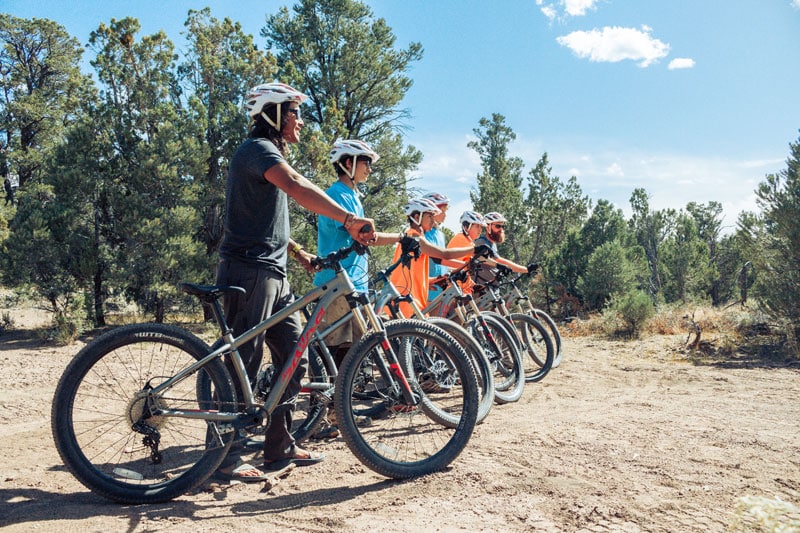
Teens with Level 1 Autism thrive in environments that engage both their minds and bodies. At ThreePeaks Ascent, activities like hiking, slackline, and mountain biking challenge them to stretch their cognitive flexibility, build problem-solving skills, and improve emotional regulation. Nature plays a powerful role in this process. The unpredictability of a mountain trail or the focus required to scale a rock wall mirrors the real-world challenges these teens face. Each task presents an opportunity to practice important social skills like teamwork and communication while also fostering individual growth and resilience.
The restorative effects of nature are particularly important for teens with autism. Being outdoors reduces stress and anxiety, helping them better manage sensory overload and emotional fluctuations. Whether they're walking through a forest or navigating a river trail, the natural environment creates a soothing backdrop that promotes self-reflection and calm. Nature also encourages teens to explore at their own pace, providing them with the freedom to make decisions in real-time and trust their instincts. This sense of autonomy builds confidence and teaches them to approach new challenges with a growth mindset.
Experiential learning at ThreePeaks Ascent also allows teens to encounter and overcome setbacks in a safe, supportive way. When they face the physical and mental demands of an outdoor challenge—whether it’s mountain biking or learning to navigate a new trail—they’re learning how to handle failure, reflect, and try again. This perseverance not only builds grit but also prepares them for real-life obstacles, both personal and social.
Additionally, the beauty of nature provides a unique space for teens with autism to focus on details that others may overlook. The texture of leaves, the sound of wind, or the rhythm of a river can capture their attention and help them regulate sensory input. It’s these small moments of connection with nature that encourage emotional regulation and mindfulness, offering a deep sense of calm and satisfaction.
Finally, nature-based experiential learning helps teens with Level 1 Autism explore their interests, discover strengths, and build self-efficacy. The skills and confidence gained from these outdoor experiences extend beyond the moment, empowering them to apply what they've learned to other areas of their lives. By blending the therapeutic power of nature with hands-on learning, ThreePeaks Ascent helps teens grow, thrive, and develop a stronger sense of who they are.
You want to see your teen thrive, and ThreePeaks Ascent is here to help. You will find a compassionate team that is ready to meet your teen where they’re at. Reach out today, and we will walk you through each step.
Each individual with autism is unique. The level of disability and combination of symptoms can vary dramatically on the autism spectrum which makes it essential for every child and teen with ASD to get a proper diagnosis and the treatment they need. For teens with level 1 autism, a credible nature-based therapy program or residential program can help refine and teach these individuals how to work through their executive function deficits through individualized care and a research-based model to facilitate lifelong growth and lasting change.
About ThreePeaks Ascent Nature-based Therapy Program
The ThreePeaks Ascent program is uniquely crafted to assist students and their families in creating lasting, life-long emotional changes through compassionate, intentional, research-backed, and safe nature-based therapy programs. The professionals at ThreePeaks Ascent understand individuals don't come with instructions, and every student is unique, capable, and amazing in their own right.
Our program focuses on helping adolescents and their families through difficulties that occur when various behavioral, cognitive, or developmental issues are present. Research shows that engaging individuals on a personal level with strategic and intentional activities will aid in developing the tools and skills necessary to engage in life healthily and positively.
Benefits of a Nature-Based Short-Term Residential Treatment Program
Being immersed in nature allows teens to be in an environment free from the distractions of their everyday lives and can have a profound positive impact on their lives. It improves their mental, emotional, and physical health. Here are the benefits that your teen and your family as a whole can see while your teen is in nature-based short-term residential treatment.
Additional References & Mental Health Resources
To learn more about level 1 autism, we recommend the following resources: